Positano History
Positano has been a Roman retreat, a port of a sea republic, a town emptied by emigration and, within living memory, the most photographed village in Italy. The story explains the towers on its shore, the villa under its church and the essay that made it famous, and it adds a layer to the Positano day tours you will take.
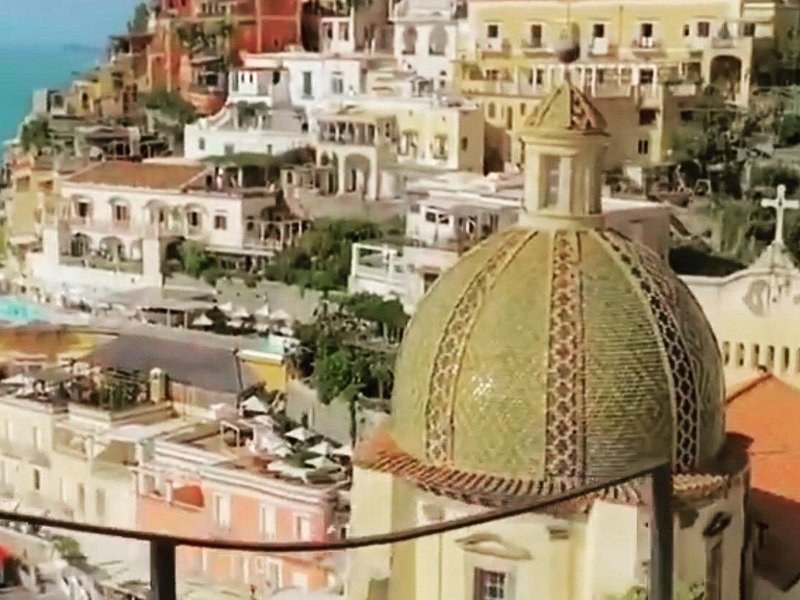
A Roman villa, buried in AD 79
Wealthy Romans built seaside villas along this coast, and one stood where the church of Santa Maria Assunta stands now. The eruption of Vesuvius in AD 79 buried it under ash and pumice, as it buried Pompeii across the bay. Its painted rooms were found only in 2000, excavated in 2003–2006 and 2015–2016, and opened to visitors as MAR Positano on 18 July 2018.
A port of the Amalfi Republic
From 839 until 1073, Amalfi governed itself as a maritime republic whose sea law was used across the Mediterranean, and Positano was one of its ports. Its ships traded with the eastern Mediterranean, and the town's fortunes rose and fell with the republic's.
The trading centuries
In the 16th and 17th centuries Positano prospered again on trade in spices, silks and fine woods, and much of the money went into the houses that still climb the valley. The Byzantine icon in the church, and the legend of sailors who heard "Posa, posa" and landed it here, belong to the town's long seafaring life.
Towers against the corsairs
Raids by corsairs from North Africa were a constant threat, and watchtowers went up along the shore to give warning. Three stand at Positano: Torre di Sponda, from the 13th century and the oldest; Torre Trasita, recorded in the 16th century between Fornillo and the main beach; and Torre di Fornillo, built in 1582 above Fornillo.
Emigration to America
In the 19th century the old trade collapsed, and a large part of the population left, most of them for New York. Positano shrank to a fishing village. The cliff path from the main beach to Fornillo is named Via Positanesi d'America for the families who went.
Steinbeck and "Positano bites deep"
In May 1953 Harper's Bazaar published John Steinbeck's essay "Positano", written after a stay in the town. "Positano bites deep," he wrote, "a dream place that isn't quite real when you are there and becomes beckoningly real after you have gone." The essay drew a new kind of visitor to a town that had been almost forgotten.
Moda Positano
By the late 1950s Positano was a resort, and its tailors began making the light, hand-dyed clothes that became known as Moda Positano. In the 1960s its handmade sandals spread along the coast and to Capri. The shops in the lanes still sell both.
Li Galli and Nureyev
Li Galli, the three islets off Positano, Gallo Lungo, La Rotonda and La Castelluccia, are the Sirenuse of local legend, the rocks of the Sirens. In the late 1980s the dancer Rudolf Nureyev bought them, and he kept them until his death in 1993. They remain private, and boats stop only to swim beside them.
A UNESCO landscape
In 1997 the Amalfi Coast, Positano included, was inscribed on the UNESCO World Heritage List as the Costiera Amalfitana: a landscape of terraced lemon groves, vineyards and towns built into the cliffs over centuries. The listing covers the whole coast, from Positano in the west to Vietri sul Mare in the east.
Positano timeline
| When | What happened |
|---|---|
| AD 79 | Vesuvius erupts; a Roman villa at Positano is buried, as Pompeii is |
| 839–1073 | The Maritime Republic of Amalfi governs itself; Positano is one of its ports |
| 13th century | Torre di Sponda is built; the Byzantine icon of the Black Madonna is in the church |
| 16th century | Torre Trasita is recorded on the shore; trade brings the town its prosperity |
| 1582 | Torre di Fornillo is built above Fornillo |
| 19th century | Mass emigration, mostly to New York; the town shrinks to a fishing village |
| 1953 | John Steinbeck's essay 'Positano' appears in Harper's Bazaar in May |
| Late 1950s–1960s | Moda Positano: resort clothes and handmade sandals |
| 1997 | The Amalfi Coast is inscribed on the UNESCO World Heritage List |
| 2000 | The Roman villa beneath Santa Maria Assunta is discovered |
| 18 July 2018 | MAR Positano opens the villa to visitors |
The villa's opening hours are on things to do in Positano, and the towers and the cliff path are part of Positano's beaches.
Next: read the facts that surprise people in Positano facts, or compare every tour on Positano Tours.