Positano Facts: A Buried Villa, Nureyev's Islets and a Famous Essay
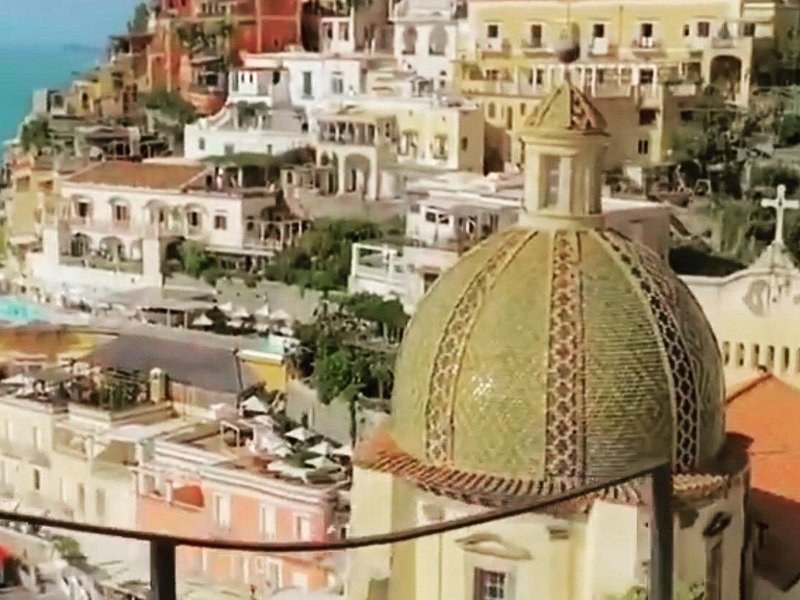
The short answer. Under Positano's church lies a Roman villa nobody knew about until 2000. The islets offshore belonged to Rudolf Nureyev. Three watchtowers guard the shore, a legend explains the icon in the church, and a 1953 essay by John Steinbeck made the town famous. None of it needs a guide to find.
Most visitors know Positano as a view. The town has more going on under the surface, some of it literally, and knowing it changes how you see the lanes, the beach and the sea you will cross on the Positano day tours. These are the facts that surprise people most.
A Roman villa lay unseen under the church for almost 2,000 years
When Vesuvius erupted in AD 79 it buried a Roman seaside villa here, as it buried Pompeii across the bay. The villa lay under what became the church of Santa Maria Assunta, and nobody knew it was there until 2000. It was excavated in 2003–2006 and 2015–2016 and opened as MAR Positano on 18 July 2018, with painted rooms in the style of Pompeii.
There is no railway on the coast at all
For all its fame, the Amalfi Coast has no train. The nearest railheads are Sorrento and Salerno, which is why every day trip here is by road or by sea, and why a Pompeii day from Positano is a drive of about an hour and a half each way.
The dome is covered in majolica
The green and yellow dome that anchors every photograph of Positano is clad in majolica tiles, the glazed ceramic of this coast. It sits directly above the beach, so it is the first thing you see from a boat and the last thing you see leaving.
A legend explains the icon in the church
Inside hangs a 13th-century Byzantine icon of the Black Madonna. The story goes that sailors carrying it heard a voice say "Posa, posa" (put it down), landed it here, and it stayed. The town celebrates the Assumption every 15 August, with the feast beginning on the evening of the 14th.
Three towers watched for corsairs
Raids from the sea were a constant danger, and three watchtowers still stand on Positano's shore: Torre di Sponda from the 13th century, the oldest; Torre Trasita, recorded in the 16th century; and Torre di Fornillo, built in 1582.
Rudolf Nureyev owned the islets offshore
Li Galli, the three islets off Positano, are the Sirenuse of legend, the rocks of the Sirens. The dancer Rudolf Nureyev owned them until his death in 1993. They are still private; you can only swim beside them from a boat.
A path is named for the people who left
In the 19th century much of Positano emigrated, most of it to New York. The cliff path from the main beach to Fornillo is named Via Positanesi d'America after them.
One essay put the town on the map
In May 1953 Harper's Bazaar published John Steinbeck's essay "Positano". His line, "Positano bites deep", is still the most quoted sentence ever written about the place.
The whole coast is a UNESCO landscape
In 1997 the Amalfi Coast was inscribed on the UNESCO World Heritage List as the Costiera Amalfitana, from Positano in the west to Vietri sul Mare in the east. What it protects is not one building but a landscape: the terraces, the lemon groves and the towns built into the cliffs. You are standing in it the moment you step off the bus.
The Pompeii ticket changed in 2026
Since 12 January 2026 a full ticket to the ancient city costs €20, and €25 with the suburban villas outside the walls. Entry is free on the first Sunday of every month, when you should expect crowds. Several Pompeii tours from Positano already put the ticket in the fare, so check your card before you pay at the gate.
The tourist tax follows the stars
Positano charges its tourist tax only from April to October, and the rate depends on where you sleep: €5 a night in a five-star hotel, €4 in a four-star, €3 in a three-star and €2.50 everywhere else. Children under ten pay nothing, which is worth knowing before you compare room prices.
The coast road runs on odd and even plates
On busy days from June to October, only cars with odd or even number plates may drive between Vietri sul Mare and Positano from 10:00 to 18:00, and in August and September the rule applies every day. It is one more reason the boats are so popular: you simply sail past the queue.
The coast grows its own lemon
The long, pointed lemons you see on every terrace are the Sfusato Amalfitano, protected as Limone Costa d'Amalfi IGP. They are thick skinned and low in acid, which is why the limoncello poured after dinner and on the boats tastes of the peel rather than of sharp juice. You will find them in the shops as soap, sweets and ceramics too.
A fish sauce holds Italy's first fishery DOP
Colatura di alici, the amber anchovy extract made in Cetara at the eastern end of the coast, became Italy's first fishery product with DOP status in October 2020. A few drops on spaghetti with garlic and parsley is how you should try it.
The favourite dessert is younger than you think
Delizia al limone, the dome of lemon-soaked sponge on every menu, looks centuries old. It was created in 1978 by the Sorrento pastry chef Carmine Marzuillo, which makes it younger than many of the people eating it.
The facts at a glance
| Fact | When | Where you see it |
|---|---|---|
| The Roman villa is buried | AD 79 | MAR Positano, under the church |
| Torre di Sponda is built | 13th century | The eastern shore |
| Torre di Fornillo is built | 1582 | Above Fornillo |
| Steinbeck's essay appears | May 1953 | Everywhere you look |
| Nureyev's islets pass on | 1993 | Li Galli, from a boat |
| The coast joins UNESCO's list | 1997 | The whole coast |
| The villa is found | 2000 | Under Santa Maria Assunta |
| The villa opens | 18 July 2018 | Piazza Flavio Gioia |
Seeing it all in a day
- Start at the church and MAR Positano, open daily from 9:00 in summer.
- Walk the cliff path to Fornillo, past Torre Trasita.
- Take a boat that passes Li Galli, on the coast or on the way back from Capri.
- Ride the local bus up to Nocelle for the view back down the coast.
- End on the beach at sunset, under the dome.
The full story is on Positano history, the villa's hours on things to do in Positano, and the beaches on Positano beaches. The boats that pass Li Galli are on Positano boat tours and Capri tours from Positano, and the villa's twin across the bay is on Pompeii tours from Positano.
Now you know what is under the surface. See it from the water and from the ruins: every day out is compared on Positano Tours.
See the stories for yourself
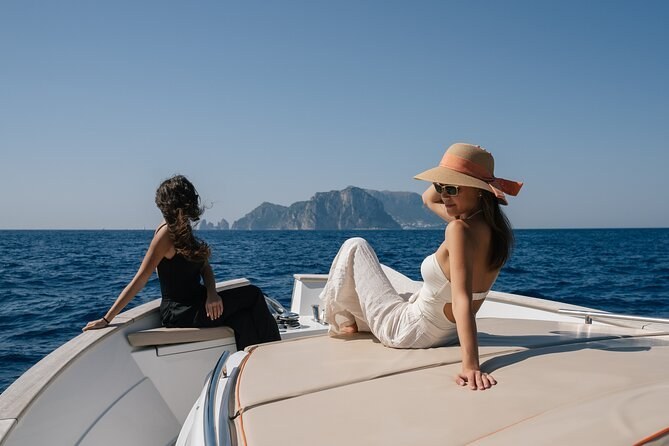
Private Boat Tour To Capri Departing From Positano
A private boat from Positano's pier for up to five, three hours on Capri.
From $673 per group, up to 5
Check Availability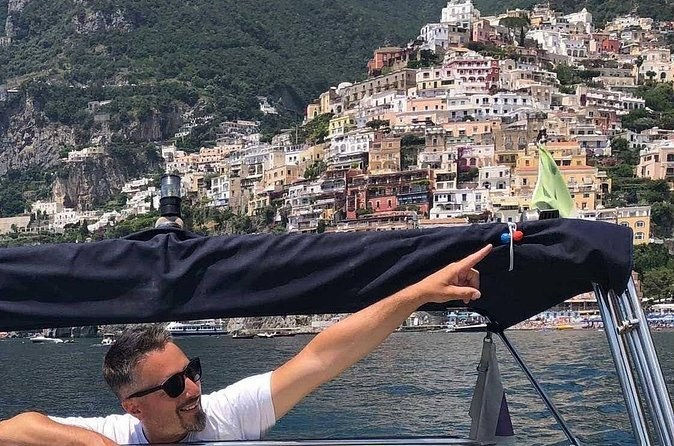
Amalfi Coast Private Boat Tour
A private boat for up to six, boarding at the harbour nearest you.
From $1,299 per group, up to 6
Check Availability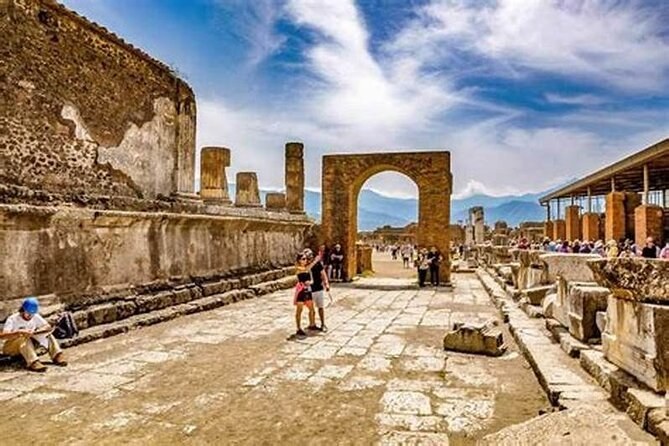
Pompeii Tour with Lunch and Wine Tasting from Positano
From Positano: Pompeii with a guide and ticket, then a Vesuvius winery lunch.
From $294 per person
Check Availability